Embracing Human Error: A Path to Team Excellence
“To make no mistakes is not in the power of man; but from their errors and mistakes the wise and good learn wisdom for the future.” - Plutarch
Many leaders and teams struggle to accept the inherent risk and potential for failure in strategy and operational delivery with human involvement.
An organisation’s ability to innovate and adapt is crucial for survival yet fear of making mistakes is a significant barrier to innovation and success.
Despite loving team sports, I’ve reluctantly coached or managed my kids’ teams for over 15 years. The pressure on kids and teams to perform can be extreme, and the flood of professional highlight reels online blurs the line between typical and exceptional.
Despite everything great about team sports, it can also teach kids that failure is rare or bad. I hate seeing kids’ heads drop after a mistake, making it twice as hard to refocus and enjoy the game. The experience of working in an organisation as an executive or employee can be the same.
The Necessity of Embracing Error
At work, reducing human error is essential for safety, quality, and performance. However, mistakes are inevitable, and how people respond to them matters. Success requires everyone to play to the best of their ability.
Healthy, high-performing teams acknowledge that mistakes are part of the process, and companies that remain competitive and relevant, despite rapid changes, excel in embracing errors to develop new products, improve business models, and achieve goals.
A 2024 study on error prevention and learning from mistakes in organisations showed that integrating Error Management Training (EMT) and High-Reliability Approach (HRA) principles is more effective for improving safety and performance than training people to avoid errors.
Error Management Training (EMT) and High-Reliability Approach (HRA)
EMT acknowledges that mistakes will happen despite the best mitigation methods. It involves removing blame to detect, analyse, and rapidly correct errors, promoting a culture of continual improvement.
HRA complements EMT by anticipating and analysing potential risks to performance, acknowledging the inevitability of mistakes in complex systems, valuing operational and real-time insights, and developing resilience to detect, contain, and recover from errors.
This approach fosters a mindset that errors are inevitable, particularly for complex tasks and dynamic environments, and emphasises the importance of emotional control to manage negative reactions and maintain composure for clear decision-making.
Benefits of EMT and HRA
Without EMT and HRA, blame is often attributed to individuals, leading to defensiveness and anxiety that inhibits performance.
Smaller errors can escalate into larger problems, and time is wasted addressing symptoms rather than root causes. Step-by-step instructions can hard-wire fixed mindsets, resulting in reactive and often insufficient improvements.
For companies with embedded EMT and HRA practices, teams reframe mistakes as opportunities for learning and improvement. This creates psychological safety by increasing openness and reducing anxiety and helps individuals understand and manage their emotions for better performance.
Rapid error detection and early intervention prevent larger-scale impacts, while active exploration of failure and root cause analysis enhance critical thinking and problem-solving skills. Simulations allow teams to test and adjust solutions, fostering a culture of adaptive excellence.
Enabling Human Performance
The Human Organisational Performance (HOP) framework offers five easy-to-understand principles for leaders and teams to embrace error for continual improvement and safety.
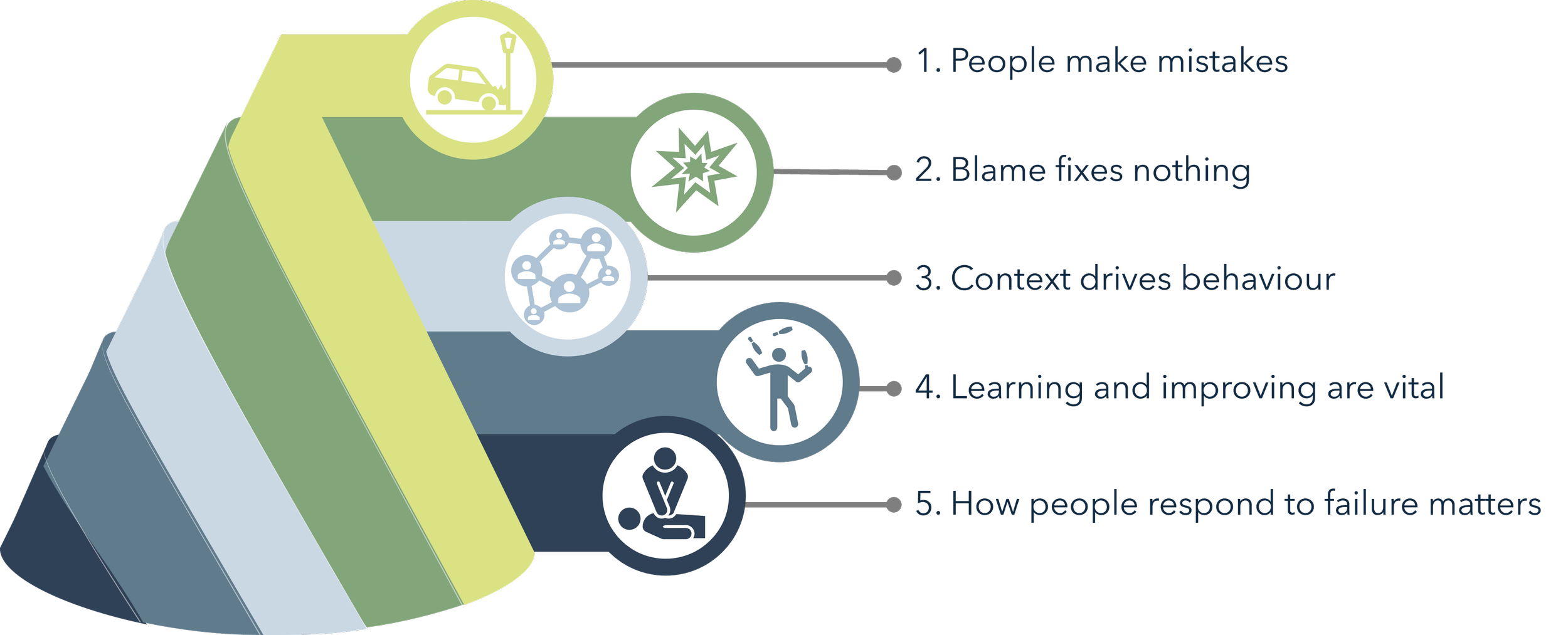
HOP principles
To embrace errors effectively:
Facilitate a Culture of Learning: Encourage a mindset that views mistakes as opportunities for growth. Leaders and teams must create a safe environment where people feel comfortable admitting errors without fear of retribution.
Develop Emotional Regulation Skills: Provide training to help people manage their emotions when things go wrong, including techniques for maintaining composure and making clear decisions under pressure.
Leverage Real-Time Insights: Use operational data and real-time feedback to anticipate and address potential risks. Continuous monitoring and analysis detect deviations from expected performance and prompt intervention.
Foster Resilience: Build team and organisational resilience by developing strategies to recover quickly from errors and unexpected events. Create flexible processes that adapt to changing circumstances and leverage the expertise of all team members, regardless of hierarchical position.
Embracing human error is not just a strategy for improving safety and performance; it is a pathway to hard-wiring excellence.
Reframing mistakes as opportunities for learning fosters a culture of continual improvement, innovation, and resilience.
The ability of leaders and teams to learn and be adaptive is the defining characteristic of organisations that achieve lasting success.
I provide employee reviews and development programs for high-value change and transformation.
Call me on +61 407 004 352 or book a time to explore options for your context.
For articles straight to your inbox subscribe to my newsletter.
For your outcomes,
Melanie.
Bibliography
(1) Foroudi, P., Akarsu, T.N., Marvi, R., & Balakrishnan, J. (2020). Intellectual evolution of social innovation: a bibliometric analysis and avenues for future research trends. Industrial Marketing Management.
(2) Anzola-Roman, P., Bayona-Saez, C., & García-Marco, T. (2018). Organisational innovation, internal R&D and externally sourced innovation practices: effects on technological innovation outcomes. Journal of Business Research, 91, 233-247.
(3) Klamar, A., Horvath, D., Frese, M., & Keith, N. (2024). Different approaches to learning from errors: Comparing the effectiveness of high reliability and error management approaches. Safety Science, 177, 106578.