The Power of Operations for Practical Planning
“The secret of change is to focus all of your energy not on fighting the old but on building the new” – Socrates
The best strategies and plans involve change and deep operational experience, without that they are just ideas that probably won’t be implemented.
A great plan is practical and drives behaviour toward a vision. It’s a no-brainer concept that often fails when creating and executing them.
The Dilemma
Strategic plans are often developed by or with the help of external consultants, which is a great way to facilitate fresh thinking. However, the danger lies in executive groupthink. Despite best intentions, executive access to unfiltered and constructive employee feedback on operational challenges is rare. Messages routinely get lost in translation up and down the chain of command, and people can fear possible consequences for not painting a rosy picture.
Without a real view of operations, strategic plans can become so high-level that nothing changes from year to year, and business as usual reigns supreme. Zero change results in zero improvement. Zero improvement means that eventually, the company fails to keep pace with changes in societal, technological, or customer expectations, and falls into complacency and irrelevance.
The Difference
For any strategy or plan to be effective, it must facilitate and support action.
Ineffective plans are a multi-page strategy that gets celebrated and then put into a drawer, and/or something that doesn’t make operational sense and fills people with indifference or dread.
Effective plans are easy to read and valuable to implement because they are created with operational teams, provide direction for the next 12 months with quarterly objectives and measures, and motivate with clear accountabilities and achievable goals while still being a stretch.
The biggest difference between an ineffective and effective plan is the level of involvement with the team responsible for executing them. Getting everyone involved may be impractical for large teams, but at the very least every plan needs an operational voice.
Real-Life Insight
Anyone in operations will tell you that without honest insights into the everyday experience of delivery teams, plans developed by executives and managers are ineffective and costly. Team-led plans are powerful because they are driven by the team and validated by executives.
-
Key priorities get lost in translation between executives and managers
Time and money is wasted on ad hoc or reactive changes that create unexpected pressure on teams
Training and support don’t address the root cause of delivery pain
People feel stuck in the grind and it’s hard to be innovative
-
Changes are based on measurable returns that increase overall performance and profit
Effective support is provided to mitigate pain points and upskill areas for a clear purpose
Teams are excited about improving things and can celebrate progress regularly
Activities over the year are easier to deliver and manage
Plans are a waste of time if people:
Have a set-and-forget mentality. They don’t respect or use plans to review operations monthly and quarterly to make good things happen
Are unable to test and adjust activities throughout the year. They don’t accept that some flexibility is needed for unforeseen events
Are not provided with the relevant permissions, guidance, and support for success.
What People Need Most
People crave purpose and direction. Without a plan, they’ll informally or formally create this themselves, which can result in performance silos instead of a company culture of excellence.
Plans must help people address and manage risk, prioritise effort based on the return or benefits, have clear goals and accountabilities, enable smart decisions, and facilitate action for achievable wins.
Practical Planning
Plans that work care for the team. They help people adapt and excel by providing clarity and structure for six things:
The purpose of the work
Realism about barriers and constraints to performance
Identifying and managing risk
Facilitation of efforts for optimal return
Skills development that elevates people and enhances capability
The ability to adapt and affect change for long-term success.
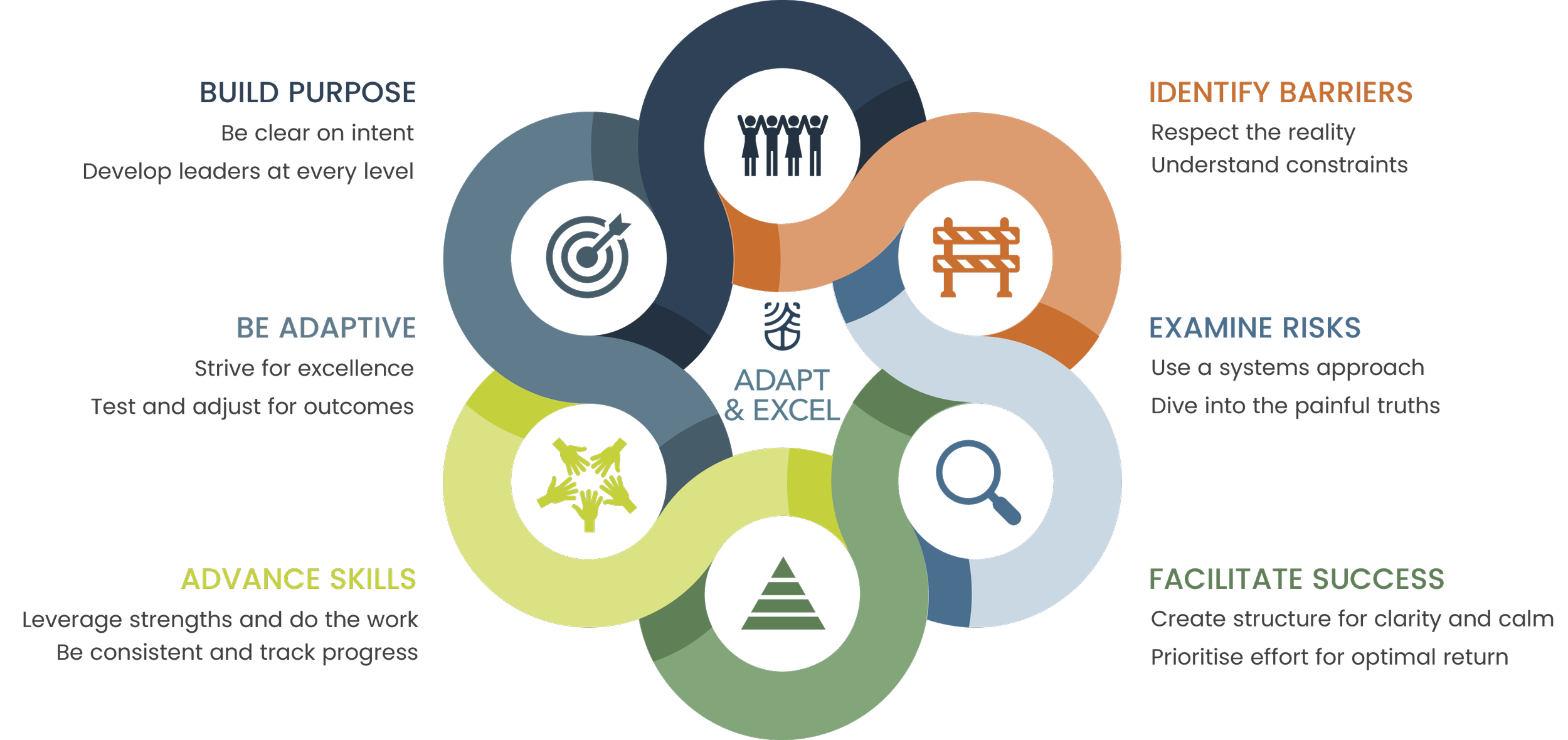
The Adapt & Excel Method®
Creating and sustaining a culture of excellence is achievable when leaders and teams design and use plans as a decision and facilitation tool.
For valuable operational insights to plan and facilitate success, contact me at +61 407 004 352 or
book a conversation.
For articles direct to your inbox, subscribe to my newsletter.
For your outcomes,
Melanie.